
Socially, consumerism is known as the phenomenon of people purchasing items in excess. However, when we look at it more carefully, it turns into a socioeconomic ideology that keeps a majority of people suffering, especially people in African countries like Sudan, who are forced into wars over resources.
Five months ago, Professor Jiang Xueqin (@profjiangclips on Youtube) released the video of his college lecture “Consumerism is the Perfection of Slavery” to explain how consumerism works in modern society.
The 60s and 70s were explosive in their activism for increasing access to wealth to poor communities. Jiang calls the 80s The Revolt of the Elites because elite Americans conspired to fight this growing equality and increase the wealth gap. Instead of economic policy thinking of the American people as workers with the right to a good job, they shifted it to think of them as consumers with the right to have good deals.
For this to work, they had to make the American people consistently focus on purchasing. If they consistently purchased, they would give money to businesses and the wealthy elite that owned them.
Prestige is a large factor in this system. Wearing an expensive brand like Gucci gives prestige, which in turn gave confidence, good feelings, and lots of customers. It’s also a social expectation. People who don’t have expensive items are seen as less than, and have to battle social contempt and self-hate.
This leads to competition amongst people. People feel inferior, bad, and are at risk of being targeted when someone is more prestigious than them, so they buy expensive stuff as well to meet or surpass that person’s level.
It is endless because there are always people who have wealthier items, and the quick speed of social media trends like Dubai chocolate and Labubus force people to constantly buy.
Sophomore Wenxi Hu said social media makes “everyone jealous” and focused on “what [they need] to fit in” and “feel included”. And acquiring this product does not ensure substantial satisfaction either.
“It leads to a lot of empty feelings,” said Sophomore Stella Falanga. “As soon as you acquire the product, you don’t feel gratification for a long time. It’s only for that specific moment.”
Gratification wears off, the trend changes, or cheap materials loses its quality, and people buy more stuff, creating a cycle.
This is how consumerism works, and Professor Jiang calls it the “perfection of slavery” because it creates masses of people who are tied to the good feelings of prestige, competition, and abandoning those who do not fit in. They cannot cooperate to work against the elite who are hoarding wealth.
Wealthy billionaires have pushed this and benefitted for decades while people suffer from it.
Hu said she felt “guilty” after spending her money because of the financial instability it causes. Many also feel guilt because of the abuse consumer items are tied to.
Slave labor and resource extraction are integral to consumerism and catastrophic in their harm to African countries.
Currently, the North African country Sudan is in a counter-revolutionary war. Over 12 million people have been displaced and assaulted as militias from the United Arab Emirates (UAE) and its financial aids like the US and Britain, forcefully take control of the land.
In an interview with Weaving Our Worlds, Sudani organizer Abdelraouf Omer said reasons for the war are “soil, but also water, livestock, forests, minerals, oil, and other resources that local, regional, and international elites have sought to control and exploit since ancient times”.
This is directly connected to consumerism. We consume to compete with others and fight for fleeting good feelings, and our government abuses people in other countries to allow companies to have access to resources to produce more stuff.
Jiang told his class, “You’ve been brainwashed into thinking [consumerism] is the only way to behave and to think,” and it is true for us too. It does not have to be how we continue to live though. Overcoming consumerism is a part of the resistance.
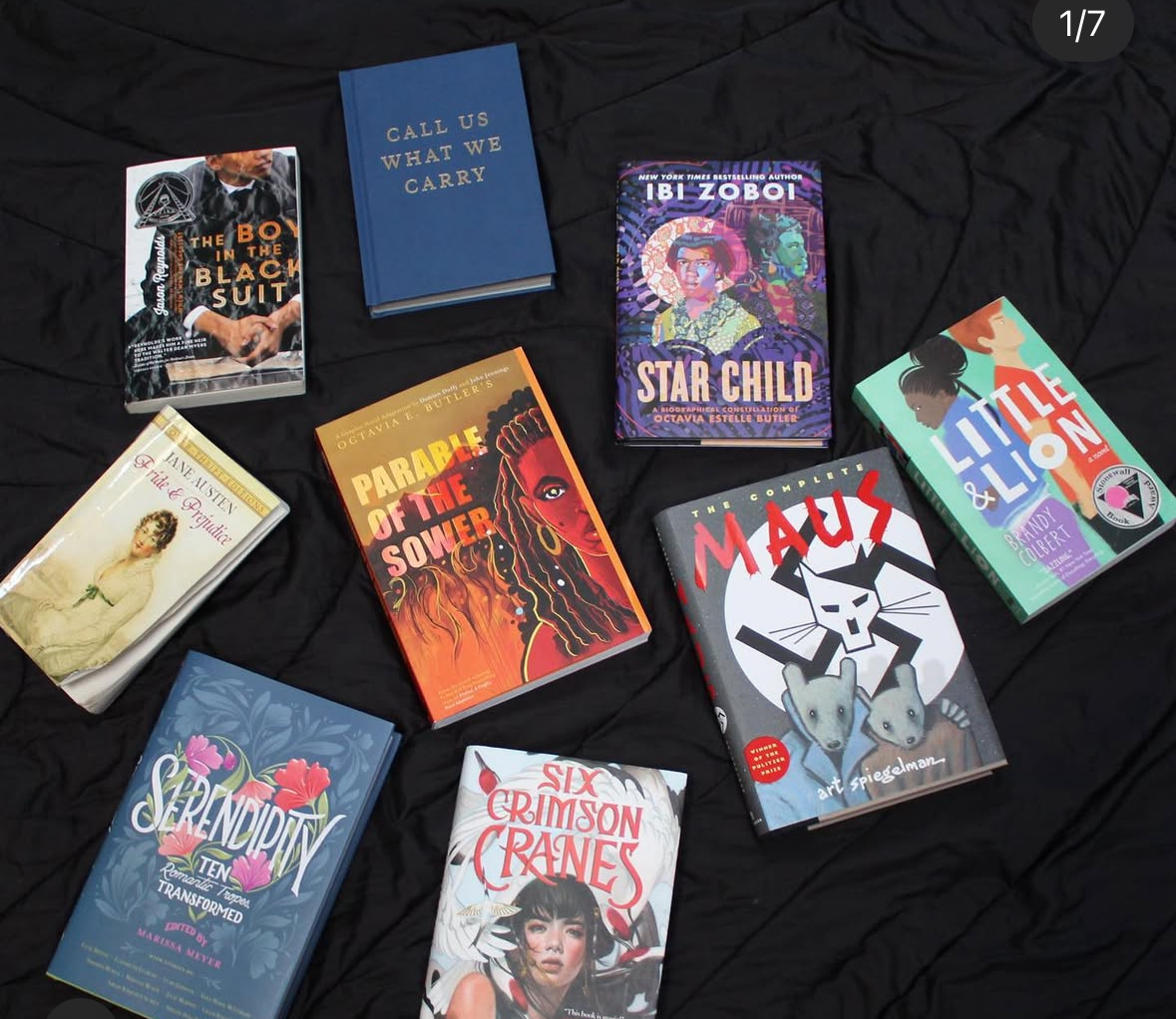
From January 19 to May 10, the school’s African Student Association club is holding their “We Stand with Sudan” campaign to collect donations for Sudani residents. Diversify Our Narrative Action Club is collecting book donations to sell for money for Sudani residents. There are already people at our school taking action to stop this, and we need to join them and other resistance efforts like the organization For Sudanese Liberation. The organization has information about how boycotting, donating, protesting, and contacting elected officials can help. We can reduce our complicity and gain autonomy from consumerism’s competition and addiction, and the autonomy of the Sudani people who have a right to determine the course of their lives.