
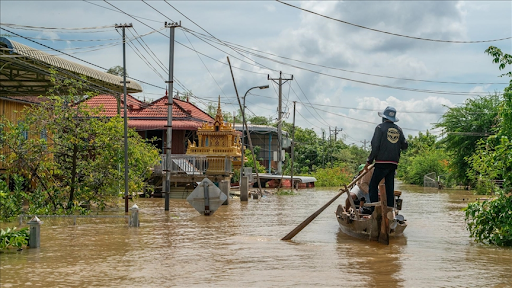
In the last days of November, the day before Thanksgiving, Asia had started getting some rain. At first it was like any other rain, their usual flooding, just as it would during monsoon season.
The monsoon season is different depending on where you are. For Sri Lanka, it has two monsoons from May to August affecting the south/west, while southern Thailand experiences their rain mainly between May and October.
Tropical storms and heavy rainfall have caused many floods before, but this time it was the worst it has ever been.
Two cyclones and a typhoon, all different types of tropical storms played their part in this disaster.
Over three days, Sri Lanka had 20 inches of rain, which is typically their average rainfall for October and November combined.
Aminah Ali, a 63 year old woman, had her son help her climb onto their roof where they had waited for 24 hours.
She told reporters, “Now my house is ruined, full of mud. I never imagined a situation like this. Now I only have one shirt left, I don’t even have any underwear, all my possessions are gone.”
Bursa Ishak, who is 60 years old from Pidie Jaya, had also lost his house. It had been swept away without a trace by how forceful the waters were.
In order for his survival, he swam and held onto a coconut tree, where he stayed for 12 hours.
Mr. Rosser, our school’s geology teacher, said, “I think they should have some sort of warning system so that the people can prepare and make aware that they need to leave. As well as educating them about the fact they’re in a low land and what to do when these floods are coming. Where they should go, also have things set such as shelter areas and food for the people who had to evacuate until the water recedes.”
Over 1,100 people have been killed across the region after facing their seasonal rains combined with tropical cyclones, which added an additional 600 casualties.
The largest Indonesian Island, which connects about at least 11 bridges from different regions and sections of the national highway, has been cut off.
Some of the villages still have no way of getting to them by road. Even in villages where they have been rescued, the local people say they don’t have enough food or clean water.
So many towns and villages have been buried under mud across Sri Lanka. The recovery for this could take up to weeks or months.
A senior here at Los Osos High School London Pickens stated,” I would be so devastated, I would try and get my family to a safe place.”
Steve Turton, an adjunct professor who teaches environmental geography at Central Queensland University in Australia stated, “All around the world where we get these tropical systems, whether you call them typhoons or hurricanes or tropical cyclones, they are producing more rain than they’ve ever produced,” Turton told Al Jazeera. “And that’s because of climate change. And that’s due to the warming of the atmosphere and the warming of the ocean that’s feeding these rainstorms,” he added.
Climate change is the starting point for a lot of major events that happen in the world. A lot of our water resources such as ice and sea levels have been deeply affected due to climate change.
Sri Lanka, one of the most affected lands, is more prone to flooding as it primarily consists of plans and lowlands.
There are over 100 rivers crisscrossing the land, and during heavy rainfall the rivers can very easily overflow and spread across the flat land. Which could then cause a wide spread of flooding.
Children have been paddling in makeshift rafts and displaced residents taking shelter in tents.
Over 1.1 million people have been affected by this disaster.
According to the dean of the school of energy and environment at City University of Hong Kong, “This time next year, when you’ve got the monsoon and if we’re still in La Niña, it’s going to be even worse.” In which he references Asia’s seasonal climate pattern that gets wetter weather.