
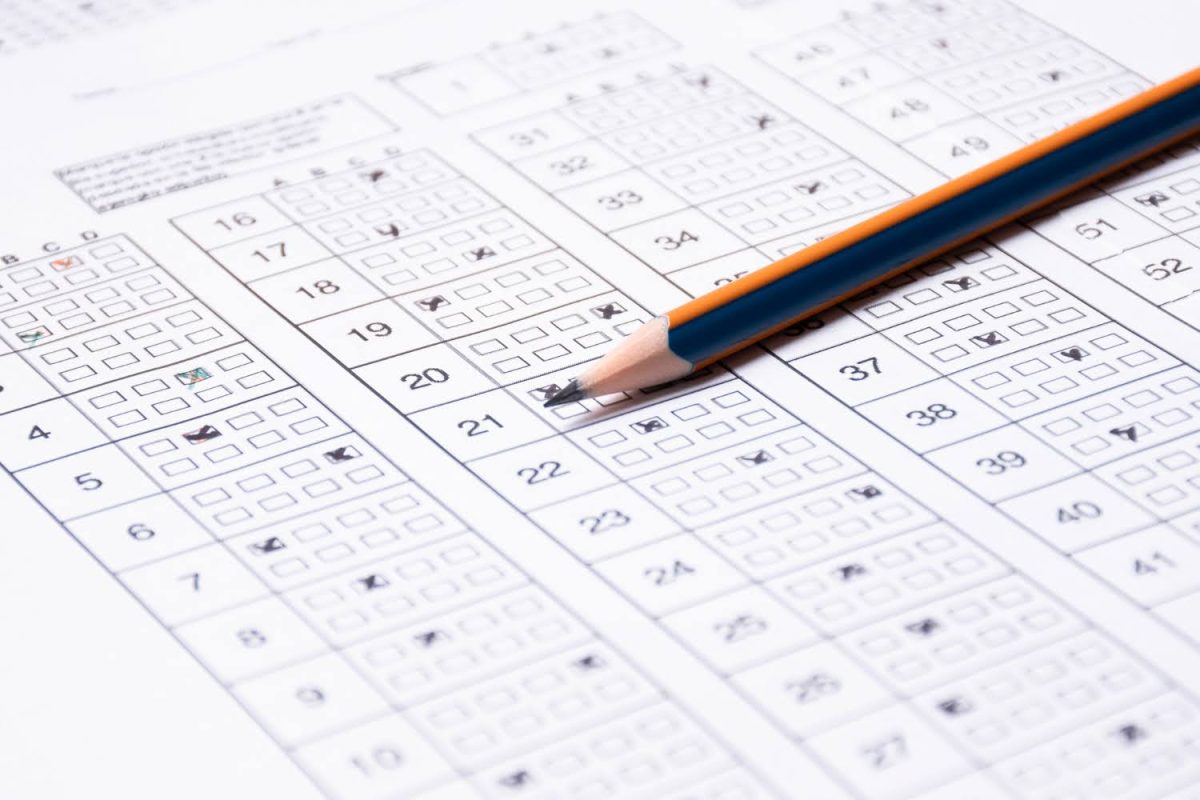
On a specific day each year, all activity in Korea is halted. Flights are grounded, military drills pause, and businesses open later than usual, to limit disruptions for this national event that affects students across the country.
This event, known as the Suneung, formally the College Scholastic Ability Test (CSAT), is South Korea’s national college entrance examination.
Administered only once a year, the Suneung plays a key role in determining students’ academic and professional routes, particularly for highly selective universities.
Students face a similar level of pressure in China through the Gaokao, their national college entrance examination. Because grading standards vary across China, the Gaokao serves as a uniform and fair way for universities to evaluate their applicants.
Senior Zia Yi said, “East Asian college admissions are solely based on one thing: how well you study. This leaves no room for short-cuts or cheating in any way; just hard work.”
University placement in China is largely determined by Gaokao scores. Universities are organized into tiers, with each tier requiring a minimum cutoff score that varies by province. Students apply to institutions and academic majors based on their examination scores.
Professional specialization in China is also structured hierarchically. Certain fields of study require higher scores, meaning that students’ exam performance does not just affect where they attend college, but also the outcomes of their careers.
Preparing for China’s college entrance examination requires a long period of rigor and effort, and students often structure their entire secondary education around studying for the exam.
With such a narrow focus, students have limited time for sports, creative activities, and other personal interests.
Noah Jeffrey, a Los Osos High School Alumni and current English Conversation (Eikaiwa) Teacher in Japan, notes, “this can also lead to students not knowing their place in the world or struggling to express themselves outside of an educational environment […] once they are no longer in the cycle of studying and preparing for tests.”
China’s reliance on exam-based admissions is something continued from their historical roots. The modern Gaokao is often linked to earlier civil service examinations used to select government officials based on merit and capability, ultimately preventing corruption.
While the content of exams have changed, China’s approach toward higher education continues to be shaped by these standardized evaluations.
Jeffrey said, “this is unlike western teaching philosophy that prioritizes critical thinking, where you are expected to gain some knowledge and apply it in different situations to test your thinking ability.”
Other East Asian countries also employ this similar approach of exam-centered admissions. Students in Japan prepare to take standardized entrance exams that play a major role in university placement, much like those of Korea and China.
“A child’s personal interests and extracurriculars tend to take a backseat, [and] while extracurriculars are important, academics will never be pushed to the side or neglected,” said Jeffrey, reflecting on how parents and students in Japan view education.
In the United States, admissions follow a more decentralized system. Instead of relying on a single national exam, universities reviewing applications consider a combination of criteria, such as SAT/ACT scores, extracurricular activities, and sports, that reflect students’ performance over time.
Yi shared her experience with college admissions. “If I were to take one big exam, I probably would have spent most of my time trying to better my test-taking skills and study more efficiently so that I would do well on the big day. But for me, I tried to fill up my profile with more extracurricular activities that represented who I was and showed what I wanted to do in the future.”
This process of review encourages youth to explore interests and hobbies beyond academics and generally produces more well-rounded individuals.
However, this diversification of skills outside of the classroom can also compromise academic effort in achieving specialized and higher-level academic courses.
In our present world, students are now receiving constant exposure to different international standards and admission systems, and learning that there can be a myriad of roads to success.
Jeffrey noted the change he has witnessed over his years of teaching in Japan. “A growing number of parents are letting their children decide how they want to be educated, leading to elementary schools where students don’t have structured classrooms, rather they are open play environments where children may explore subjects and activities they like freely.”
This represents a shift in how children were expected to behave a number of years back. “Children would spend days and weeks studying and studying, with no say on what they want to learn about,” Jeffrey said.
The globalization of classrooms brings constant reevaluation of the definition of success across countries.