
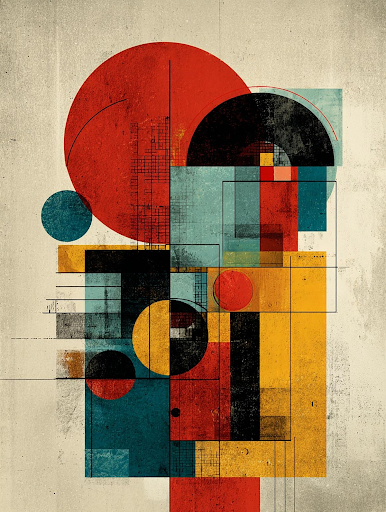
Artists and creators often lead lives of unpredictability and independence among their own ideas, except for the everlasting debate: Does a simple painting of a black square constitute art?
In past years, there has been a spike of artists, young and old, creating extremely minimalist pieces that they claim to be filled with emotion under the guise of “Modern Concept Art,” which often leaves the audience wanting more and wondering if a piece should really be called “Modern Art.”
The genre of modern art has often been acclaimed as a trendy and simplistic representation of a single thought in the form of a minimalistic creation that takes galleries by storm.
This movement started in the 1860s as artists started to experiment with newer forms of impressionist art, testing the limits of the ability to capture emotion with the stroke of a paintbrush. This continued throughout the late 1970’s as many famous painters, such as Pablo Picasso, began to express thoughts in their paintings through untraditional methods, using dynamic color palettes and eye-catching shapes as a form of retaliation against traditional art styles.
Art teacher Mr. Chertkow shared this definition as he said, “A big one is the belief that Modern Art basically means big abstract paintings with bold colors and dramatic brushstrokes. That’s one slice of it, but Modern Art includes a huge range of looks, approaches, and ideas. Depending on the movement you’re looking at, it can be almost unrecognizable from that stereotype.”
The pieces that resulted from this time period are deemed some of the greatest works of art, acclaimed and viewed in galleries worldwide, reforming the world’s idea of what it means and requires to create a work of art.
However, in recent years, many artists have come up with various forms of intense concept art that stretch the limits of their own genre, which they seem fit to define as modern art. These pieces often include simplistic and seemingly normal patterns or shapes, but are claimed to have extreme amounts of meaning and emotion woven into them.
A simple circle on a canvas, a statue of a plastic bottle, a single fly on a white page. These are just some of the countless examples of these highly controversial works of “Modern” art that have exploded across social media, with both good and bad reviews.
Arts critics have clapped back at these artists, claiming that they are not making true art, and it should not continue to insult the genre of modern art as a whole. Many traditional views see these minimalist pieces as lazy attempts to produce a meaningful piece of art, choosing to ignore the descriptions and additional information about the art to truly understand the artist’s intent.
This sentiment is shared by Junior Mia Sun, as she said, “Art is subjective. If some people will look at a blank canvas and think, ‘that’s art,’ then that’s up to them. It is more about the meaning and what emotions it gives to the audience.”
It seems that many of these artists are creating a version of what they define as art, but perhaps they are defining it incorrectly.
The approach to art that is criticized often fits a much more contemporary and simplistic style as opposed to the intricate involvements and various attributes that make up the modern art genre. The subjective value of art places no limit on what we as humans can define as meaningful towards us or not, since everyone will have a different definition of what is truly art, although it may not fit their preferred genre.
When many choose to look at art that they see in a gallery, they tend to spend a moment pondering it rather than immediately moving on, never getting a chance to truly understand what the contemporary styles are alluding to or why the author chose to create the piece.
Mr. Chertkow stated, “It’s not enough to look at photographs of the work on a phone or computer screen. You need to go see these things in person, at a museum. The scale, the surface, the aura, the meaning—it’s all there on the wall. It isn’t on your phone. To understand them takes time. Just look and wait.”
The rise of contemporary art may be a good thing for the art community, as it will inspire younger audiences and traditional critics to spend time studying works of art that may be able to resonate with them if they are willing to look beyond what may appear on the canvas.