
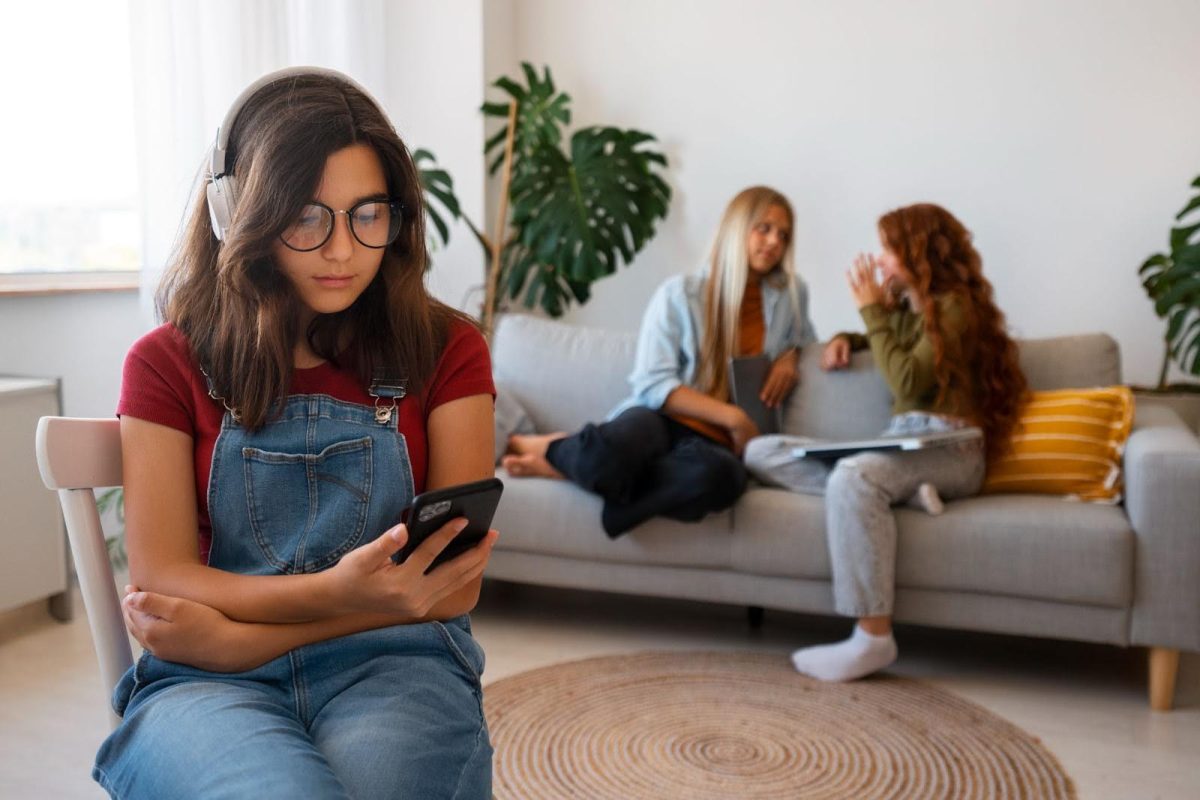
I have witnessed the favoritism of extroverted people my entire life.
Countless teachers, adults, and peers have made me feel bad about myself for not being as outspoken as other kids my age. They made me feel like there was something wrong with me, something missing.
They put more outspoken, extroverted people on a pedestal, showing obvious bias towards them.
It weighed down on my self-esteem tremendously. Every time I was too shy to speak in a group, I felt less about myself. Every time my heart pounded as I nervously raised my hand in class, I felt pathetic.
I watched as others were able to do the simple things I struggled with so easily, and I envied them. They could converse with strangers easily and speak up in class without a second’s thought or worry in the world.
It wasn’t until this year that I realized that I wasn’t the problem; it was unfair social standards.
We live in a world made for the outgoing, crafted by the outgoing. If you are not extroverted or outspoken, you are treated as less than. There is this unspoken hierarchy in society of extroverted people that most people don’t even realize exists. It lingers in every aspect of life.
However, it is most prominent in classrooms, with teachers constantly trying to get introverted students to be more extroverted, rather than catering to their personal needs.
A student who wishes to stay anonymous said, “Teachers always push quieter kids to get out of their comfort zones because they think it’s helpful, but I think it’s actually really harmful. It just makes us more self-conscious.”
Teachers assign projects that require students to present them in front of the class or work in groups, with little consideration for the undue stress these assignments can cause.
Or they do realize and simply do not care.
As someone who struggles with public speaking, I’ve always had anxiety about presenting projects to classes.
Teachers would emphasize how important these projects were for our grade, showing little empathy for the students like me who had difficulty with these types of assignments. They claimed these projects created connections and confidence. However, they never consider the anxieties of peer judgement.
The vast majority of teachers present to the class every day. It’s normal for them to get up there, preaching, expecting applause. They don’t have to worry about judgment because they know they’re in charge.
They have the power, the respect, the authority.
A power students almost never hold.
Teachers call this “collaborative learning,” but it really is just catering to extroverted students while putting shy students in uncomfortable positions. They don’t really consider the impact it has on the emotional well-being of some of their students.
There is a widely held belief that introverts are just antisocial people, but this is not true. While antisocial people do exist, most introverts just need alone time to recharge their social battery.
People like teachers think that putting kids in situations like group projects and public presentations will make them less “anti-social.”
However, it puts this pressure on introverts. When they take time for themselves, they feel like they should be more like extroverts and not have to need that time to recharge. That they should always be sociable and step out of their comfort zones.
It evokes a kind of shameful, guilty feeling that they should alter themselves to fit into a different standard.
Extroverts aren’t asked to get out of their comfort zones or alter themselves, so why should introverts have to?
“I was always told I’m too quiet, or I don’t talk enough, and they didn’t realize it, but it hurt my feelings.” Said a student who wishes to stay anonymous.