
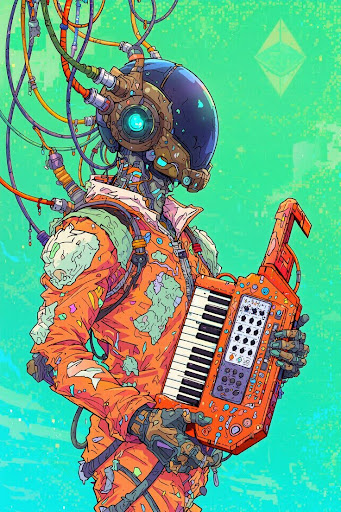
Throughout the past few years, Spotify has used AI tools to create new listening experiences. Some argue that the use of AI is worsening the platform, whereas others welcome it wholeheartedly.
Launched in 2023, the “AI-DJ” could mix playlists for users and introduce them to new music. Additionally, Spotify implemented “blends,” which combine the tastes of two users into one playlist. Spotify has also introduced a ChatGPT-like search bar where you can search for playlists based on description, making streaming the exact music you want easier. This use of AI has enhanced the listeners’ experience and made Spotify a much more appealing platform for listeners.
However, the integration of AI music has also angered some users. On Spotify’s website, users can upload questions and complaints about the platform, and many have reported that Spotify’s “release radar” was chalked in AI-generated music.
Spotify has platformed “ghost artists” that generate music artificially, and AI bots stream the generated songs to produce revenue. This music is characterised by AI-generated, simple album art, only one or two tracks for the ‘artist,’ no listeners, no related artists, no followers, and simple melodies.
Sophomore Lexi Marqueses, LOHS choirs’ media manager, said, “[Musicians] will grow more dependent to rely on AI. We [musicians] sort of rely on it for creativity, and we don‘t really use it as a tool that is helping to enhance, but rather do it for us ourselves.”
In 2023, listener “ChrissyGee” wrote a post on Spotify’s website proclaiming the concern. “The tracks structurally sound pretty much the same. A simple four on the floor beat with a wobbly bass line and random twinkly synth sounds on top. Sometimes even the actual melodies were identical between several tracks as well.”
This user had several replies from other users stating their release radars also contained a majority of AI music, demanding that Spotify remove ghost artists.
Senior Toby Tim, sound engineer for LOHS technical theatre, said, “AI removes a lot of the creative aspects that you would have had with an actual drummer or player.”
Marqueses said, “It’s so easy to copy and paste from AI. As a musician, we get repetitive; it [the AI] would hypothetically have a standard of how music would be, and nothing would be unique anymore.”
AI-generated music is usually instrumental, but sometimes entire bands are generated through AI tools.
Recently, a band named “Velvet Sundown” released two albums and amassed over 1 million plays, only for people to realise their music, backstory, and streams were all AI-generated. Originally, the band was said to be “guided by humans,” when in actuality, it used the software SUNO to generate the music in its entirety.
Spotify is allowing these ghost artists to thrive. Gustav Söderström, Spotify’s Co-President, has said, “If creators are using these technologies and are successful, we should let people listen to them.”
Marqueses said, “Everyone has a gift in music, and AI doesn’t have the same soul that artists have.”
Tim said, “Part of humans making mistakes is what makes music talent good. If you outsource that to AI, which makes the same music every time, [the AI] is going to decrease the quality of the music. You lose the human feel.”
Because Spotify, the biggest music streaming platform globally, is implementing both AI tools and AI-generated music, artists now compete not only with each other but also with algorithms perfectly tailored to the listener. The act of “finding” music has become something that Spotify does for you, and if the algorithm pushes music that isn’t real, and listeners don’t pay attention, artists now lose out on a gigantic amount of revenue.
Through Spotify, melody, rhythm, and harmony have been reduced to an algorithm. Now, it’s up to the user to distinguish if they prefer true human art or an imitation of it.