
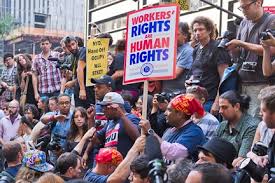
A protest for safety. A protest for rights. A protest for fair working conditions. On January 26, more than 31,000 health care workers from Kaiser Permanente in California and parts of Hawaii walked out on strike.
Participating in the strike are nurses, anesthetists, midwives, dietitians, and a variety of other health professionals.
The strike has left dozens of hospitals and hundreds of clinics with staffing shortages, and as a result, many appointments were postponed, canceled, or shifted to virtual meetings. In some cases, patients have been forced to transfer to other facilities.
Kaiser is working to recruit more licensed health care professionals in order to maintain staffing levels during the strike.
Many of these workers on strike are members of the United Nurses Associations of California/Union of Health Care Professionals (UNAC/UHCP), and are advocating against being understaffed, overworked, and underpaid.
Workers charge non-profit healthcare system Kaiser Permanente for assigning too many patients at once, leading not only to higher burnout rates among staff, but also to rushed care, which can put patient safety at risk.
“The inability of healthcare workers to provide quality care to patients is something that requires immediate action,” said Junior Jennica Alixes. “These workers go into the mindset of putting others before themselves, but if their own work life is affecting that mindset, meaningful progress should be made for the betterment of all.”
Kaiser and the UNAC/UHCP have been engaged in contract negotiations for more than eight months as of now, and haven’t yet reached an agreement.
Union leaders say these national contract negotiations have been stalled since December of last year, after Kaiser walked away from discussions on the topic.
For some workers and their families, however, the uncertainty of the strike created difficult decisions. Junior Kirsten Labarda shared her father’s experience working for Kaiser. “He participated in the rallies and left work, however returned after a few absent shifts. He told me, ‘a strike won’t feed the family,’ and a few others of his coworkers started to return to work as well.”
They have also raised concerns that Kaiser has attempted to discourage workers from striking through internal messages.
“Instead of addressing unsafe staffing and patient care concerns, Kaiser is issuing messages that pressure workers not to strike, exaggerate the risks of participation, and encourage employees to report one another. That is intimidation,” said President of UNAC/UHCP Christine Morales in a statement to ABC News.
Labarda said, “there were minor working environment conflicts between those who chose to proceed with the strike and those who didn’t. ‘There’s always a choice,’ [her father] said. It was just a matter of facing the consequences.”
On February 9, another wave of about 3000 pharmacists and lab workers throughout Southern California joined the open-ended strike, expanding the scope of the labor protest and increasing the pressure on Kaiser Permanente’s healthcare operations.
Kaiser Permanente responded to the strike, stating that the workers’ efforts were unnecessary and only counterproductive. The company has claimed they already offer competitive wages and staffing plans, and argued that raising wages could further affect its ability to operate.
Kaiser also emphasized their commitment to continue providing care during the strike.
As one of the largest worker strikes this year, the ongoing dispute leaves both sides eager to reach an agreement as soon as possible.