
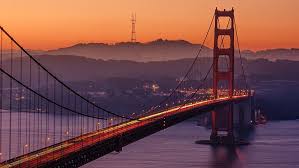
Imagine a universe where “Golden State” doesn’t just refer to the sunlit beaches, Disneyland, and Hollywood—but to an independent nation that stands alone from the United States.
While this concept has been dismissed as a far-reaching idea, the idea of California seceding—called the “CalExit” has brought much debate in recent years as political tension rises and people become more agitated with the economy and cultural identity that they hold.
The consistent rise in the costs of living, the homelessness setback, and high grocery prices all fueled resentment among Californians. Almost 71%, according to a Public Policy Institute of California statewide survey, feel as if their money supports other states over their own. Tensions have only grown as the federal government has threatened to withhold funding, in turn making Governor Gavin Newsom consider keeping California’s federal tax donations for in-state use.
Initially, the CalExit movement came out as an “expression of the will of the people of California” in 2016, ultimately a reach for independence from the United States that sought more independence without formally moving away.
However, as of 2026, the CalExit movement is still continually in discussion, and if CalExit gains 546,651 signatures by 2028, voters would be faced with the question of leaving the United States to become a free independent country.
With California being the fourth-largest global economy, it is referred to as a “giver state”, meaning a state that significantly contributes more in federal taxes than it receives, opposing “taker” states, which rely mostly on redistributive federal funding.
With all this in mind, Marcus Ruiz Evans of Fresno, who is the man behind the movement, aims to “…investigate independence from America,’ we think, will be a shockwave across the world”. While the idea itself would not have been to vote for California to actually separate, the question still raises numerous legal questions of scrutiny.
For the past few years, divides both within the state as well as between California and the rest of the U.S. have sparked at most six initiatives aimed at breaking California into smaller states or splitting it entirely from the rest of the country.
When asked if he believed movements like CalExit reflect on the political frustration of the world, or if it’s more symbolic, staff member Mr. Sierra responded by saying, “It’s more symbolic in the sense that California is becoming more and more of a liberal blue state and is disagreeing with America politically as a whole.”
Furthermore, Evans has pointed out that this political tension, such as the two deaths of the protestors in Minneapolis on the Golden State Freeway, the drop in election fairness by 17%, and Texas’s habitual pollution violations at a Gulf Coast Plant, has all caused the movement to strengthen. “I don’t want to say this the wrong way because people are suffering, people are dying, people are scared, but it’s kind of the best time for CalExit because the mask is off,” Evans said.
While the proposition itself has also reached out to assembly members and governor candidates, Evan can only hope that with the signatures, the resolution can be passed in less than a month.
However, the question most people think about is, “What really would happen if California left the United States?” While it’s not perfectly predictable, there are several occurrences that can happen if California secedes. One of the most worrying is the possibility of another Civil War, as history has proved secession as a possibility of violence or even formal war. Other splits throughout history have additionally sparked violence as well, such as when Bangladesh decided to become a separate nation in 1971, and Pakistan responded with genocide and mass rape.
However, it doesn’t always play out this way. In 1993, what is known as the Velvet Divorce, the Czech Republic split from Slovakia with no resulting bloodshed.
Additionally, California would possibly mirror a nation similar to Canada, functioning as an independent power with its own power grid, agriculture system, and military protection, but continuing to hold its progressive center-left policies, along with the loss of $200 billion annually in federal funds.
When asked if she thought California was politically and economically different enough from the rest of the country to be considered independent, freshman Annika Jimenez responded with, “From what I’ve seen of California, the economy is greater—and we have pretty different political views as well, so it could very well happen.”
Moreover, whether the U.S. tries to forcibly prevent California from leaving would largely depend on who is leading the country. California is the largest state in the union by population, and its departure would only radically shift the political playing field. The balance of power in Congress would tip toward complete Republican control, while the loss of California’s electoral votes would leave little hope for the U.S. to see another democratic president in the future.
Despite all this, no matter what may occur, losing California would deliver a significant blow to economic and political stability. Despite this, the conversation invites the growing dispute between California and the federal government, emphasizing how these relations need to improve before anger escalates.