
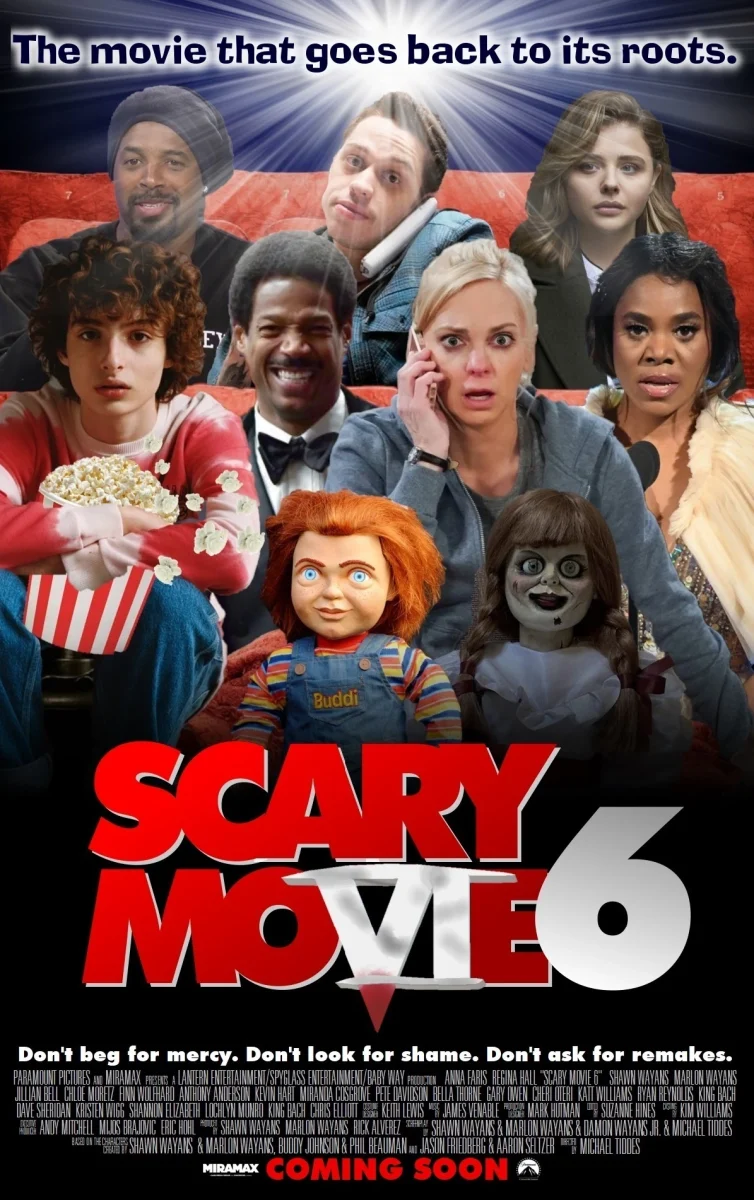
The Scary Movie franchise is back. After more than a decade away from theaters, Scary Movie 6 is set for release in June 2026, bringing with it the franchise’s signature mix of horror parody and outrageous comedy.
Familiar faces such as Anna Faris, Regina Hall, and Marlon Wayans return to lampoon popular films, trends, and pop culture phenomena. Yet even before hitting theaters, the new installment has generated significant backlash, largely over its handling of jokes related to gender identity.
The controversycontroversey centers on a brief scene revealed in the first trailer. In the clip, a character is attacked by a masked killer. Another character shouts, “He stabbed her!” to which the injured person replies, “Not her! My pronouns are they them!” before collapsing.
While intended as a throwaway gag, this line quickly drew criticism online, with many viewers arguing that it trivializes non-binary identities. Critics have described the joke as tone-deaf and insensitiveinsensitve, saying that the franchise is relying on outdated humor at a time when audiences are increasingly conscious of social issues.
However, defenders of the film argue that Scary Movie has always been a no-holds-barredno holds barred parody series, taking aim at every trend, group, and pop culture moment without discrimination. Online discussions suggest that some backlash may stem more from percptions of laziness in joke writing rather than outright offense.
Fans of the franchise point out that its humor has traditionally been provocative, often pushing boundaries and testing social norms for comedic effect. Marlon Wayans, who is both a star and co-writer of the new film, has addressed the criticism, emphasizing that parody is meant to challenge and provoke.
Wayans stated that the franchise’s comedy has never been about targeting one group; it is about equal opportunity absurdity and that Scary Movie 6 continues that tradition. He also criticized cancel culture, suggesting that comedy should be allowed to offend broadly rather than being overly sanitized for fear of backlash.
The reaction to the trailer demonstrates how much comedy and social awareness have evolved since the early 2000s. The original Scary Movie films, which debuted in 2000, were famous for lampooning horror tropes with broad, often raunchy humor.
In today’s climate, however, jokes that rely on identity or social trends can provoke intense debate, making the line between edgy and offensive narrower than ever. Social media platforms have become lightning rods for these debates, where fans and critics alike weigh in immediatelyimmediatly after trailers are released.
Despite the controversy, anticipation for Scary Movie 6 remains high. Many fans are eager to see how the franchise tackles modern horror and pop culture in its signature over-the-topover the top style.
The backlash may even serve as free publicity, drawing attention to the film and stimulating discussion about what constitutes appropriate humor in contemporary cinema. Ultimately, Scary Movie 6 may not satisfy everyone’severyones taste, but its arrival underscores a tension between traditional parody and evolving cultural sensitivity.
Whether audiences laugh or groan at the jokes, the film reminds us that comedy continues to be a reflection of society, sometimes awkward, often provocative, and occasionally controversial.