
Most people I know consider cartoons to be childish and comical. I mean, even the word “Cartoonish” means to be defined by a humorous characteristic. However, even if cartoons are intended to be targeted towards younger audiences, does that mean that they hold no meaningful lessons and complexities?
Ever since the 20th century, cartoons have been the heart and soul of shaping a moral society, molding countless children into brighter and more empathetic individuals as they navigate through changes in life. However, as time passes and we age, we begin to forget the deep and valuable lessons that cartoons, such as “The Lion King” and “Avatar: The Last Airbender”, have embedded in us since we were kids, as people slowly transition from cartoons to more mature TV shows.
Cartoons are motion pictures produced through the use of animation to depict characters and events through entertaining storytelling. They are particularly targeted towards a younger audience, but even though they are directed towards youth, the values and morals embedded in them can be much deeper and darker than anticipated. The primary reason scriptwriters and directors choose to implement this is to convey a meaningful lesson or story that can help build character in the viewer.
Although cartoons target younger audiences, people mistakenly confuse this concept with the idea that cartoons are childish and comical purely for entertainment purposes, confusing the concept with a limited definition. Over time, people have forgotten about the true meanings, lessons, and values taught in them, labeling them as “insignificant” and “stupid” simply because of the age range. In reality, age should not dictate what you do, wear, watch, or how you act.
Ever since “Fantasmagorie”, the first cartoon, was released in 1908, it introduced revolutionary animation and visual techniques that helped shape cartoons into what we know today. The animation in this film was adapted into society, becoming a model for future animated movies and shows.
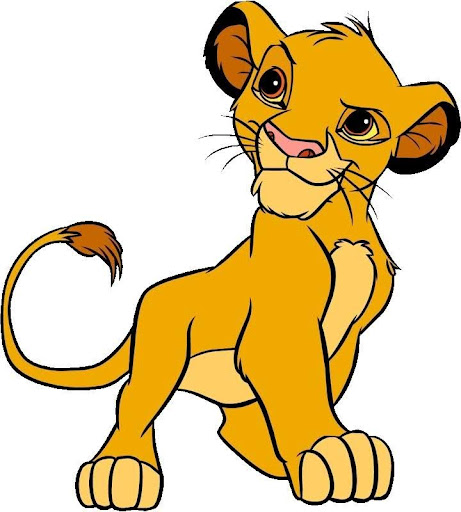
One of the most successful animated movies, “The Lion King”, serves as a model for future entertainment for children. It successfully introduced the concept that animation does not mean a movie has to have restrictions, since it teaches moral values and acts as entertainment at the same time. “The Lion King” is heavily action-packed, with conflicts raging between the safari animals after the death of Mufasa, the lion king.
It is later revealed through storytelling that the one who ended Mufasa’s life was actually his younger brother, Scar, who was very dear to Mufasa during his life. Scar is the villainous younger brother of Mufasa who sought to claim the throne and be titled king of the Pride Lands.
Before the birth of Simba, Mufasa’s son, Scar was true to Mufasa and extremely loyal. However, Simba’s birth propelled Scar into a path of envy and hatred, since he desired Mufasa’s perfect life for himself. Scar’s journey into envy and jealousy is symbolically recognized as the destructive nature of jealousy, and how someone as close as your own brother can instantly turn on you in a second if it concerns their own success.
In addition to this lesson, “The Lion King” has many more life messages, such as: living in the present but learning from the past, taking responsibility for your actions, being careful of the crowd you surround yourself with, and accepting and navigating through sudden change.
Cartoons have culturally impacted our society for generations to come, but their lessons are losing meaning and are now being deemed childish with the rise of social media and more mature content. Their lessons and life messages are slowly eroding from our society, since children are now watching meaningless YouTube videos, TikToks, and other videos instead of cartoons. Fewer and fewer children are retaining knowledge from animated films since they are becoming too absorbed with the content on their phones.
Due to their addictions, children are becoming less self-aware and understanding of those around them. Recent studies are beginning to show that children are slowly losing the concept of respect and resilience, two concepts that are primarily taught through cartoons.
Another exemplary cartoon that applies similar morals and lessons is “Avatar: The Last Airbender”, which is a Nickelodeon TV show created to explore the concepts of death, destruction, and the suffering that war brings, instead of romanticizing it. The show teaches the importance of peace, personal growth, identity, and empathy, even in times of war.
Although the cartoon is short, it perfectly serves as a role model for what every cartoon should be: a series of animations meant to depict a more complex meaning. Even with all these wonderful lessons being embedded in them, most people choose not to rewatch or keep watching old cartoons from their childhood because they deem them as “childish.”
For multiple generations, the hidden meanings behind cartoons have taught us to be understanding and caring to one another, to express kindness, friendship, and gratitude to each other. Shows like “My Little Pony: Friendship is Magic” and even “SpongeBob SquarePants” are prime examples of cartoons that inform us about the importance of empathy and friendship.
All cartoons have symbolic messages, meanings, and advice that can help anyone at any time in life. Some are about understanding the complex world around us, while others teach us about being wary of our surroundings and of whom we trust. Small or big, old or young, cartoons are always there to guide one to a path of wonder and empathy.
We should all be able to grow as a people, a community, and a society, but we should never forget our roots and where we came from.
Whether we have realized it or not, the impact that cartoons have left on our world’s culture is generatively inspiring.