
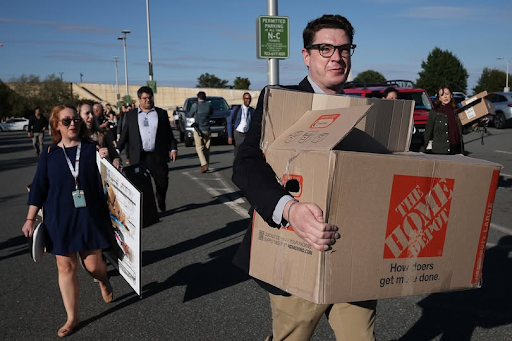
On October 15, dozens of journalists from the Pentagon walked out of their offices, took their belongings, left their access badges, and never looked back regarding the new proposed set of rules they were expected to sign regarding the kinds of stories they could cover and the information they were allowed to produce.
The intention of the rules issued by the U.S. government seems to be for national security and to prevent the wrong information from leaking to unwanted sources. But, in the grand scheme of things, the government issued restrictions to control the passage of information to those who specifically have the right to such information.
PBS cites Chief Pentagon “spokesman” Sean Parnell’s statement that these restrictions are “common sense”. He also explains that they will not back down from the push of this policy because “it’s what is best for our troops and the national security of this country.”
However, the rules that appear to have been issued to the Pentagon staff don’t mention anything about national security and are later defended with the idea that it was simply for the acknowledgement of policy and not necessarily enforcement of it.
This policy, however, directly interferes with the First Amendment of the Constitution, stating that there shall be no law “prohibiting free exercise thereof…freedom of speech or the press.” The staff who walked out retaliated by exercising the latter half of the First Amendment, granting the right of peaceful assembly, which seems too on the nose to sweep under the rug.
Associated Press News explains what the Pentagon meant by its rules: “it can’t block journalists from reporting news, but it can revoke the credentials of reporters” if anyone looks for information without “an official OK.”
Pete Hegseth, the Trump Administration’s Secretary of Defense, is the one who implemented this controversial sequence of events, kick-started by the need to get approval to seek unauthorized information, “even if it is unclassified”.
This is an interesting take on restrictions, as the constitutional First Amendment right includes freedom of the press. This amendment also established freedom of assembly, which is what around 50 reporters from the Pentagon did that day in retaliation for this threat to reporters.
News services such as The Washington Post and The Guardian walked out along with ABC, CBS, The New York Times, and Wall Street Journal, which have been served lawsuits by President Trump for their coverage in an effort to “choke off funding”.
Now, those who are reporting from the Pentagon include approved news outlets like Lindell TV, Post Millennial, and Gateway Pundit. All of which report very right-swaying, bias-ridden news and are referred to as “next-generation” employees by the Washington Post.
It’s not a threat that these companies exist; in fact, they have that right to, but the problem is that they signed away other rights that many other news outlets, whether they were left-wing or unbiased, had no interest in signing away, and rather stood for American values.
Replacing the entire political spectrum of “mainstream” reporters limits the optics of what opinions Americans are “allowed” to have and is certainly a matter of censorship, and could even venture into the realm of propaganda if this restriction continues.
Rather than being transparent about information, the policy “threatens to punish”, as AP News puts it, these journalists for gathering everyday news stories and relevant topics.