
The Korean-pop (K-pop) community is known around the world for its extremely catchy music, outstanding performances, and amazing idols. Millions of people admire K-pop groups, not only for their talent, but for their style and personalities. However, behind this whole fake image of the K-pop industry, there is a really bad issue that is ignored: homophobia.
South Korea is still a very conservative country when it comes to the rights of the LGBTQ+. While being gay is not illegal, same sex marriage isn’t seen as normal, many people still see the LGBTQ+ as something that is “wrong” or “unnatural.” Since K-pop idols are expected by a large audience to represent Korea’s values and to maintain their “perfect” image, members are rarely allowed to openly express LGBTQ+ identities or support without facing backlash.
The issue with companies is that they strictly control all their idols, actions, words, and sometimes even their emotions. Often, idols are told what they can and can’t do, mainly in the media. For this reason, it’s often seen as hard to be open about their sexuality and preferences. Companies don’t want to lose fans, sponsorships, or even their careers over these types of things. Even after all of this, some idols will still silently support the LGBTQ+ community. Homophobia can even be seen in the fans and media, and the reactions to idols.
Idols who are perceived as “too masculine” or “ too feminine” are often mocked or even bullied online for their appearance. Even these rumors about an idol’s sexuality can lead to hate and harassment. Even small gestures, like the distance between members, are sometimes sexualized or even criticized in harmful ways.
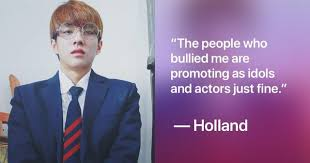
After all these things, a few idols have spoken up for LGBTQ+ rights, such as Holland, the first openly gay K-pop idol ever, and others who have shown their full support and love, through speeches or symbols. However, these moments are still extremely rare to see, and idols who do this are often praised, but also are extremely hated.
This shows that diversity of opinions is still within the industry and the fanbase. K-pop continues to grow globally and promote messages of love and self-expression, and homophobia will remain one of many major issues. The industry often avoids LGBTQ+ topics to avoid hurting their “perfect” image. As fans become more aware and vocalize opinions, there is still hope that one day it will become a safer and more inclusive space for anyone and everyone.