
In the modern art scene, the environment is constantly changing with every emerging artist pushing the boundary of this loosely defined topic called “art”.
From the musical industry to art exhibits, artists choose new ways of expressing themselves. The very definition of art is a means for the artist to express themselves and the world around them (at least when a rich patron didn’t commission it).Due to the prevalence of consumerism in our society, we assign certain attributes to inanimate objects. A diamond for eternal love, glasses as a symbol of academic intellect, and many others among our ever–growing list of intricacies.
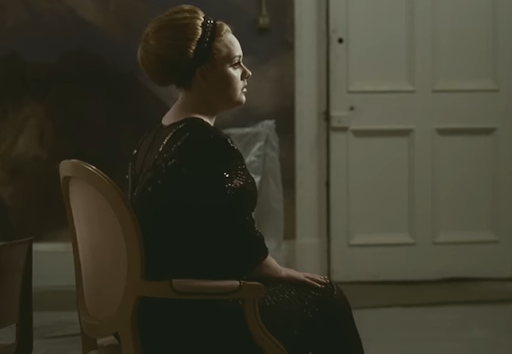
In one of her most popular songs, “Rolling in the Deep”, Adele speaks of her pain with a failed relationship. As much as I love her songs, her artistic choices for the music video did not sit well with me.
Taking place in what appears to be an abandoned house, throughout the video, there is a recurring shot of a staircase that leads down to a pile of shattered ceramic plates. A figure outside of the shot throws plate after plate to contribute to the growing pile of broken utensils.
While the act of shattering dishes was intended to represent the bitterness and agony of her heartbreak, that mountain of waste didn’t feel justified.
Arguably, without the same effect likely would not have been produced without the significance of that pile of shattered dishes. The overall tone of the music video, as well as her song, was focused on delivering a raw and sharp image of heartbreak.
Perhaps it was necessary to create such a striking visual, but that does not blindly justify the physical waste. It was a convenient metaphor that relied heavily on destruction to create emotional depth.
With content like this, it simply reinforces the idea that intensity in emotions could only be visible in excess, but that is not always the case.
The idea of more or an excess of is a prevalent idea in modern art that is used as a shortcut. The more that there is, the “realer” it gets, the more intense and shocking it is.
While Adele communicated a sense of loss with destruction, artist Damien Hirst takes it one step further in his art.
As a contemporary artist based in London, Hirst’s work deals with moral questions such as immortality and death. Although these are two very noble subjects, they are nothing new and have fascinated artists for centuries before him.
However, it is undeniable that he is the first artist to express his views with the corpses of thousands of once living creatures.
With an estimated 913,450 deaths attributed to him, it is a wonder that he would be referred to as an artist in the first place.
One of Hirst’s most famous pieces, titled The Physical Impossibility of Death in the Mind of Someone Living, was purchased by billionaire Steven A. Cohen in 2004 for eight million dollars, although it is rumored to have sold for 12 million dollars.
The piece features a 12-feet long female tiger shark suspended in a glass case filled with blue formaldehyde. When the specimen began to deteriorate in 2006, it was replaced by another female tiger shark, which raised questions about its authenticity.
Hirst defended his work, saying that “the idea is more important than the object”.
As erudite as the quote sounded, it appears that Mr. Hirst was simply attempting to excuse his calculated decision to ensure that he kept the prestige with his name and the money in his pocket.
He even admitted this, saying, “It’s amazing what you can do with an E in A-Level art, a twisted imagination and a chainsaw,” as he was accepting the Turner prize, which is an award given annually to notable British visual artists.
While contemporary art has its merits, Damien Hirst has pushed it past its boundaries. Arranging the corpses of animals aesthetically is not exactly the definition of art, and no amount of syllables twisted into statements about death should be glorified in this manner.
It certainly should not be worth millions of dollars to observe something that would have otherwise belonged to a crime scene in a murder mystery show.
Damien himself had commented, “I just wanted to find out where the boundaries were. So far, I’ve found there aren’t any. I just wanted to be stopped, and no one will stop me”, a speech that is nothing less than what would have been expected from a psychopath if not for the fact that we call him an artist.
Destruction has become nothing more than a shock value in art; rather than making the viewer reflect on their work, it causes a reaction. Which, yes, lingers in the viewer’s consciousness, but it stays at the surface level and rarely penetrates to a more profound level.
Art does not need waste to be validated, its very value has come from scarcity.