
In February, the #QuitGPT campaign launched to encourage people to stop using the generative AI model ChatGPT. Concerns of its water and land damage, intellectual damage, and data harvesting have been building since its birth and popularity spike in 2022.
For this campaign, though, the leaders are focusing on its politics as a reason to divest from the company. The President of OpenAI, the company that hosts ChatGPT, Greg Brockman, donated $25 million to current US President Donald Trump’s presidential campaign, which is over five times as much as the second largest donation. Brockman is also the top spender of a Super Political Action Committee (PAC) that lobbies for pro-AI politicians.
OpenAI’s program, ChatGPT, is also used by the Immigration and Customs Enforcement (ICE) to review resumes for future employees.
The #QuitGPT campaign rose during worldwide outrage rose over the January assassinations of Alex Pretti and Renee Good by ICE agents. Before these two as well, the agency was despised for harassing and killing many people. This also contributed to the rising dissatisfaction with President Trump.
Hate for ICE and Trump led to a campaign of over one million boycotters. Participants are committing to not using ChatGPT, cancelling paid subscriptions, and sharing the campaigns with others.
While the company’s politics were the tipping point, the campaign also cites smaller reasons for boycotting the program, including its destruction fo the environment.
ChatGPT is a generative AI model, meaning that it can create new content, but the expense is high. OpenAI has been lobbying for the rapid creation of data centers to house AI programming. Since ChatGPT has so many users, the data centers need to use water to cool down the computers to prevent them from overheating.
However, they drain massive amounts of water. People all over the United States who live near data centers have reported extreme rises in electricity bills and a lack of water. While not all Americans are experiencing this, AI’s effect on water has already risen to the global level.
In January, the United Nations (UN) revealed that the Earth is in water bankruptcy – a first for the planet. They had already declared a global water crisis, but now, water systems like lakes and wetlands have been so mined that they can no longer naturally refill.
The effects are not evenly distributed though.
According to the UN’s article “World enters era of ‘global water bankruptcy’”, “The burdens fall disproportionately on smallholder farmers, Indigenous Peoples, low-income urban residents and women and youth, while the benefits of overuse often accrued to more powerful actors.”
The “more powerful actors” likely refer to large corporations that are using large amounts of water to train and use AI, and governments like the United States that are rapidly creating billion-dollar deals with AI companies.
The article states that around four billion people of the world’s seven billion were already water insecure for at least one month out of the calendar year. The number is likely to continue to rise.
The organization states that a return to normal is “infeasible”, but there is still hope for recovery if worldwide action is taken against the overuse of water.
Land use is also a concern for the AI data centers, which tend to be rather large. This is a large concern in Indigenous lands, where governments have broken land agreements before, and Indigenous people fear losing their homes to a center.
Many also fear that ChatGPT will give their data to the government because of its political ties and demonstrated weak ethics.
The way that AI attains content is another issue. In order to generate, ChatGPT has to search the internet for content to pull from. This means that it uses other people’s work for its creation, but it does not give those sources credit.
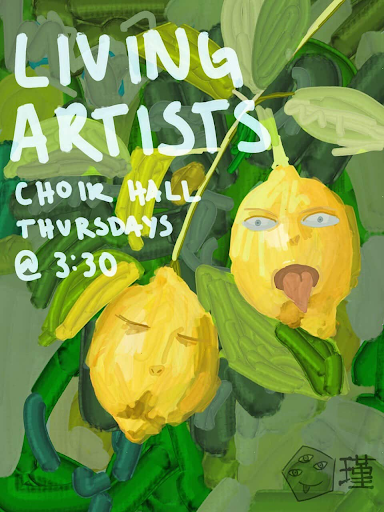
To combat the harms of AI, some has created campaigns like #QuitGPT, at our school, students created the Living Artists Club.
The club has “Living Artists” who will create free, promotional art for organizations on campus so they do not have to rely on AI, and give the “Living Artists” experience in collaborations and commissions.
The club’s President, Freshman Ollie Teresa, said, “By providing a direct alternative to generative AI in the artistic field, we hope to minimize our school’s contributions to the global detrimental effects generative AI can have on the environment while also bringing a spotlight to real artists in our school who pour their souls into their work.”
The club sees excessive generative AI usage as detrimental to the world and our school culture. “Los Osos High School should be a school where our students and staff have the integrity to not just create their own art, but take responsibility for the work they do,” said Officer Freshman Mae White. “People who honestly put effort into their work, and who lead with that work ethic, are just the kind of people we want to put out into the world, and the removal of AI in our school would foster an environment that could do just that.”
The club’s leadership and its members are passionate artists who are using their skills to reduce AI’s injustice. “By supporting a club like Living Artists, you support real artists and directly go against what’s causing so many people to be thrown out on the streets [from losing their job],” said Treasurer Freshman Boni Huang.
To support the club, you can follow their Instagram @living_artists_of_lohs and join their weekly Thursday meetings after school in the Choir Hall.