
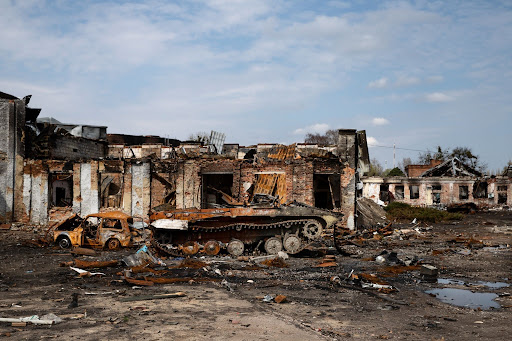
As of writing this, America has been at war with Iran for nearly 40 days. This tension between the countries is a violent one. The U.S. air campaign, as well as with help from Israel’s air force, has been bombing 300 to 500 Iranian targets daily.
These attacks have been made through Operation Epic Fury. This operation is led by the United States, coordinated by Israel, and all target enemy naval forces through airstrikes on their bases. The intent is to destroy Iran’s nuclear production capabilities to ultimately defend the security of the United States.
The initiation of the operation, increasing tensions between regions, was caused by Iranian drone attacks and threats regarding U.S. military and shipping paths. Such drone attacks were very numerous in the first few days but have shown a significant decline.
The minimum number of 15 American fatalities have been confirmed as well as about 200 injuries to service members.
According to the New York Times, “six personnel in a March 12 aircraft crash in Iraq” were killed, and other deaths “occurred during Iranian strikes in Kuwait and elsewhere.”
Also, there was an American jet essentially lost in Iran. The rescue operation was successful and the crew member was found alive.
The latest update available, by CNN, explains that Trump suggested a 45-day ceasefire on April 6. However, Iran rejected the proposal and “called for a permanent end to the war”.
Senior Mia Butera says “I understand that they are world powers, but the war can end now, they just need to talk it out.”
No one likes to see violence ensue, and especially on such a grand scale. There have been talks between the two countries but there seems to be a conflict with requirements.
To end the war with Iran, Trump insists on reopening the Strait of Hormuz and allow the U.S. to impose a toll on the passing ships. However, Iran will not allow this until the war is complete and there is a total ceasefire, using the gatekept oil as leverage.
The opening of the strait is so critical because the closure blocks about 20 percent of the world’s oil. Many, if not all, American drivers have felt the effects of this at the gas station.
Senior Adrian Marquez says “the prices of gas are literally painful to look at.”
Although raising gas prices starts as a simple inconvenience, it means that a large group of Americans have to budget a significant amount, and with time without change, we may even see an even greater economic recession.
Going forward, we hope to see an agreement and an end to the violence. Recovery in Iran is going to take a long time, and who knows if we will see the recovery of gas prices around the U.S.. With these crucial effects, we must be mindful of spending, those directly or indirectly harmed, as well as the sense of unity we must maintain as a nation.