
For thousands of years, philosophers have debated whether humanity has a good nature that’s only corrupted by society, or a fundamentally bad nature that is kept in check by society. This question has long fascinated storytellers, appearing in films, series, and video games alike.
The human mind has always been incredibly complex, for humans are the sole mammals who often act based on feelings rather than logic. Our actions are often shaped by our upbringing, surroundings, choices, and the people we choose to surround ourselves with. More so, the world shows the strength of the human spirit. The line between good and evil runs through every human heart. No person can be one or the other, as each person carries the potential of both kindness and cruelty.
With this idea in mind, people often become conflicted on whether or not the people around them are truly as kind as they say they are or if they’re simply kept in check by the societal standards of living.
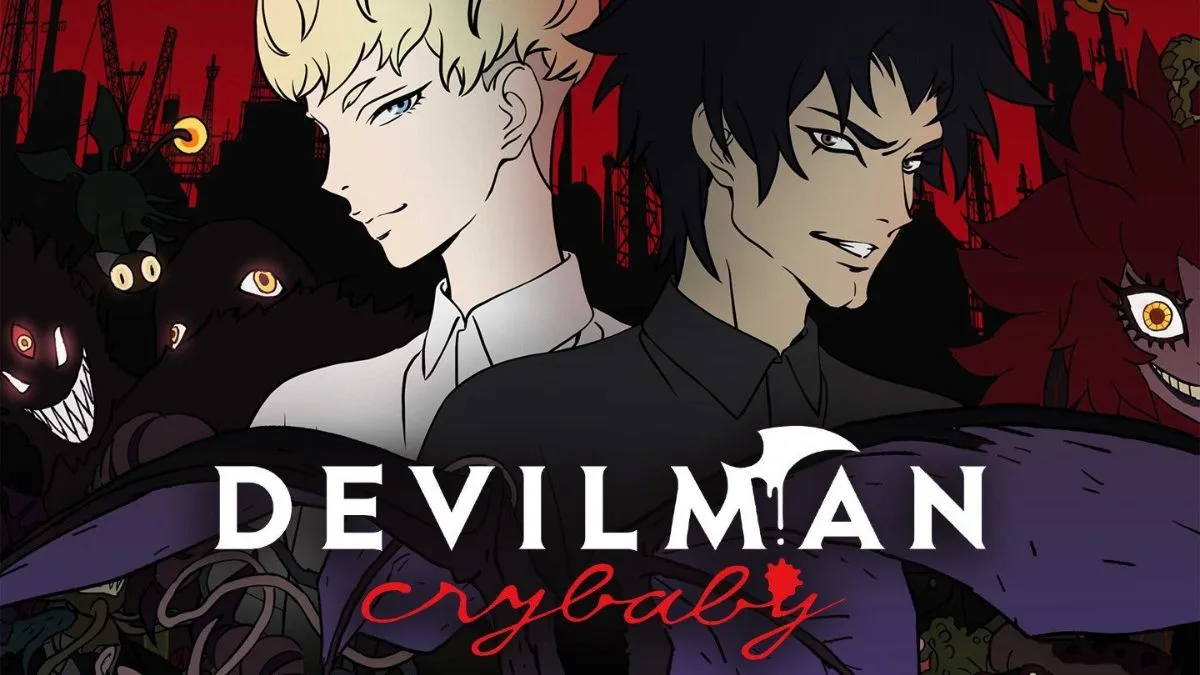
One series that confronts this idea is the Netflix series “Devilman Crybaby”. In a world full of devils disguising themselves as humans—humanity struggles between accepting this phenomenon as simply bizarre or realizing just how much the world is changing with devils now roaming the world—killing innocent people in gruesome and savage ways.
During all this chaos, the main character Akira Fudo is also turned into a devil—however, despite becoming a cruel beast, Akira never loses his humanity, while his best friend Ryo Asuka only continues to lose his—going as far as encouraging this ‘kill or be killed’ idea on television.
Through this series, the author is able to depict how truly horrible war is and the discrimination happening during it. The fact that there is so much love and friendship in the world, and yet at the end of the day, people are still going to die, living ‘pointless’ lives. People only live because the universe exists, and the universe doesn’t care about people.
While this show may share this message rather gruesomely, the ultimate message is that everyone is human and everyone is a monster—the choice is up to us.
While Devilman Crybaby confronts human nature through extreme apocalyptic violence, other stories explore the same philosophical question in much quieter, subtle ways. The film The Truman Show examines the same idea.
Truman Burbank lives in a perfectly controlled world where everyone surrounding him is acting according to script—yet the story’s tension doesn’t emerge from any devils or destruction, but from growing awareness.
Truman is forced to navigate through deception, having to question everything he’s known to describe for himself who he wants to be. Showing that the essence of having identity emerges from the pursuits of truth—showing that humans in nature do have a good nature that’s only corrupted by society. As it’s only the constructed environment Truman is subjected to that suppresses him.
When asked what type of media she personally saw that also questioned morality, Freshman Cassandra Malafa responded saying, “The Hunger Games. It shows that when the government or media normalizes something horrific, people will not question it. In the case of the Hunger Games, the children were forced to fight since they had no choice. In a dystopia, people do what they believe to be normal as an act of survival.”
The question of whether humans are inherently good or inherently flawed has no perfect answer. While society often acts as a guide, encouraging more empathy and cooperation with others, it also limits the harm that any dark impulses could cause.
Ultimately, the law is an example of that exact predisposition. However, at the same time, people must take responsibility for their own actions, because the capacity for who we become is endless. The tension between our better or worse nature is what shapes the world we live in—creating such beauty and tragedy between us all.
Asking Senior Makayla Matito what she personally believed to be the case of thinking for people, she responded, “People will act with feelings before logic often. Emotions are what really result in cause— logic just justifies action.”
The love people feel for their friends as family can just as strongly be feelings of hate. Recognizing this complexity allows us to approach life with a bit more awareness, striving to cultivate more understanding.
Ultimately, being human means navigating this fragile balance, knowing that the potential for both virtuous and sinister actions lies in each of us. While the discussion can go back and forth, it’s fundamentally up to the individual to decide how to view the world in this positive or negative panorama.