
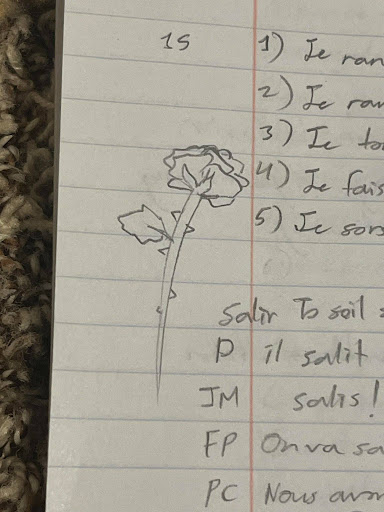
I do it, you do it. When we’re in class and the hands on the clock are moving just a little too slow, that piece of paper is looking particularly tempting especially with that pencil twirling in your hand.
Every three out of four students doodle in class on a daily basis, much to the pain of teachers, parents, and sanitation workers. Surely this marks the pathway to a life in vandalism and graffiti, defacing public property. The image of spray painting in the dark with a hood pulled over your head and ready to run at the slightest sound is practically synonymous to that 3D S doodle on the corner of your math homework.
Growing up, my parents had the ability to find the tiniest of scribbles hidden in my quizzes. Compounded with my less than wonderful grades, they would sit me down for yet another talk.
While many people view doodling as a sign of a lack of attention during class, boredom, and overall disinterest in school, studies show that doodling improves overall focus and active recall.
An experiment in 2009 proved this point by having their participants listen to droning recordings of dull conversations. Half of the experiment group were permitted to doodle mindlessly as they listened to the conversation while the other half were only allowed to listen to the recording.
When asked follow-up questions regarding the recordings, the research showed that the participants who were allowed to doodle performed 29 percent better than those who were not. These findings clearly suggest that doodling helps with concentration and recalling information.
Besides offering beneficial aspects to the learning experience, doodling acts as a creative outlet for students that does not require the burden of an intense art session.
In the academic setting, some students find it hard to make time for creative expression. With tests, homework, clubs, and other after school activities, winding down and sitting at your desk to draw seems like a distant daydream.
Junior Aideen Ahrens agrees with that, saying “I really love doing art, but it sometimes stops me from focusing on academics. I get so caught up in it that I forget about it sometimes. I still love it but I wish that there could just be a balance.”
Doodling offers a quick and easy alternative for the fleeting moments of creativity throughout the day. Doodling activates a subconscious part of your brain, which provides your mind with the space for creative problem-solving.
Many professional artists doodle as a form of warming up before a drawing session. Without the pressure of starting a finished piece on a blank page, doodling allows for ideas to flow more naturally.
Doodles add charm to your notes and offer small pockets of whimsy in your school life.
Like Sophomore Wenbo Huang said, “What’s life without little delights?”